
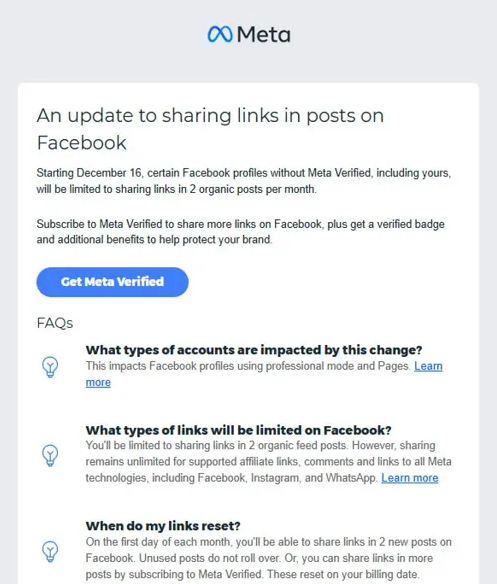
Meta recently announced that, as of 16 December, only two posts with external links would be published each month for some professional accounts and public home pages that did not subscribe to the Meta Verified accreditation service. While the test currently affects only a small number of users, it has given rise to widespread concern, particularly for content publishers and creators who rely on Facebook, which may imply a major change in the dissemination strategy. According to social media strategist Matt Navarra’s announcement on the platform, it’s not possible to get the message.Limited users need to subscribe to Meta Verified services if they want to break the 2 extra-links per month (from a monthly fee of $14.99 to a maximum of $499 for the enterprise package)I don’t know. During the test, users can regularly publish Alliance links, comments and internal links to the Meta-based platform (Facebook, Instagram, WhatsApp).
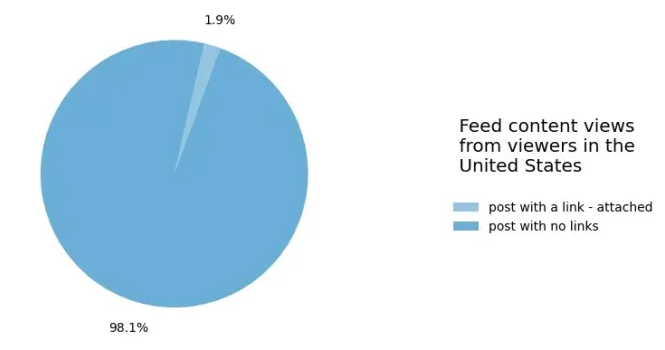
Meta confirmed to TechCrunch that the test was designed to explore whether “additional release permissions with external links provide additional value to the subscriber of Meta Verified”. The company emphasized that the test did not include news publisher accounts for the time being and that the external chain of comment was not restricted. Meta’s third-quarter financial report shows that the category of “other income” has increased to $690 million, which is double the number that it was when Meta Verified was launched in the second quarter of 2023, indicating that the pattern of paid subscriptions is gaining market acceptance. At the same time, platform data show a continuing low rate of contact with the outer links: According to the latest edition of the Wide Content Browsing Report, only 1.9 per cent of the United States users ‘ movements are viewed by out-chained posts, the vast majority of which come from public home pages of interest to users. This is a significant decrease from 9.8 per cent in 2022, which makes limiting the external chain to a low-risk higher-subscription conversion strategy for Meta.
The test continued the trend of social media platforms to weaken the external chain and encourage the release of original content. Previously, platforms such as X had tried to reduce the weight of the outer chain. In the context of the impact of the AI Digest tool on the traditional publishing industry, the Platform ‘ s further tightening of outward-link policies may force creators to resort more to original postage, short video or live broadcasts. The Meta Transparency Report indicates that the most widely viewed domain names in the current platform ‘ s outer chain include YouTube, TikTok and GoFundMe. If the policy is to be fully implemented in the future, creators and brands will have a choice: to pay for subscriptions to maintain extra-chain sharing capacity, to move to eco-contents in Meta (e.g., Instagram/Reels), or to completely reduce the number of Facebook postings. This reflects the deep-seated game that the Internet has evolved from an open link network to a closed platform.